



Ukrainian "orange" Democratic Opposition's leader declared her protest reached the goal. President Viktor Yanukovych still in trouble both with the EU and Russia for political and energetic point of view.
A sign of a political regress in a country totally isolated from the political and the energetic point of view. On Friday 11/16 Ukrainian "orange" Democratic Opposition leader Yulia Tymoshenko declared she ended a hunger strike to denounce President Viktor Yanukovych's Administration's frauds in last Ukrainian parliamentary election.
Tymoshenko sentenced her protest's goal has been reached after the majority of the Ukrainian people now knows the election's result has been manipulated by President Yanukovych's Administration.
All exit pools confirmed the "orange" Democratic Opposition obtained the majority of Ukrainians' votes, but official data conferred to the pro-presidential Party of Regions a strong majority in renewed Ukrainian parliament.
OSCE, the Council of Europe, NATO parliamentary assembly and the European Parliament officially stated Ukrainian parliamentary election did not respect the democratic standards, and denounced the lack of clarity during the organization of the consultation.
Because of the electoral frauds and a political repression against Tymoshenko and other "orange" Democratic Opposition's politicians, President Yanukovych broke Ukraine's diplomatic relationship with the European Union. Moreover, President Yanukovych was not able to sign a new gas supplies' agreement with Russia, on which Ukraine is dependent for the 90% of its national need.
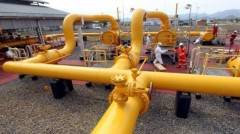
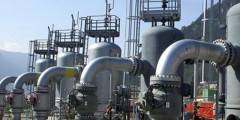
In order to balance high gas prices Russia imposes Ukraine, Ukrainian minister of Coal and Energy Yuri Boyko decreased Russian gas supplies, increased the use of coal and oil, and started the import of Russian gas bought in Germany by German company RWE, carried to Ukraine via Poland.
On Wednesday 11/16, Minister Boyko declared Ukraine will denounce Russia in Stockholm International Arbitration Court if Moscow will not give Kyiv low gas prices.
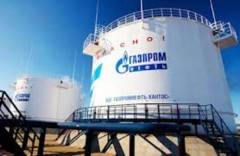
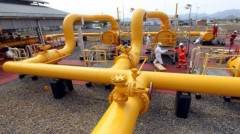
Ukraine is no more an interesting country from the energetic point of view for Russia after Russian national gas major Gazprom started the Southstream pipeline's realization.
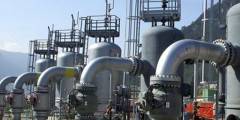
The Southstream pipeline is planed to deliver 63 bcm of Russian gas per year to Austrian terminal in Baumgartner via the Black Sea seabed, Bulgaria, Serbia, Hungary, Slovenia and Italy.
The Southstream pipeline's construction allows Moscow to replace Ukraine with Bulgaria as the most important Russian gas transit state to western Europe.
The "Orthodox Pipeline", as the Southstream has been named, is a Russia's political project. It increases EU dependence on Russian gas supplies - which is now the 40% of EU total need - and endangers European countries' national security.
The European Commission strongly criticized the Southstream pipeline also because the Orthodox Pipeline blocks the realization of the EU gas supplies' diversification project, which has been planed by Brussels to carry Azeri gas directly to Europe by the realization of several pipelines not controlled by Moscow.
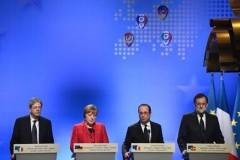
Despite of the European Commission's position, Germany and France supported Russia in the Southstream pipeline's construction.
The pipeline's shareholders are Russian national gas major Gazprom (for the 50%) Italian concern ENI (for the 20%) German company Wintershall (for the 15,5%) and French company EDF (for the other 15,5%).
Matteo Cazzulani